
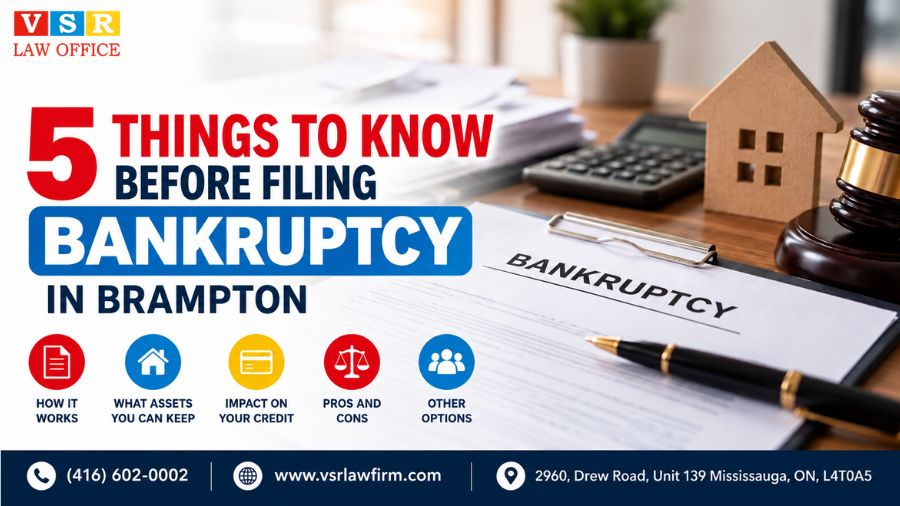
Are you struggling with debt and finding it difficult to pay your bills? You are not alone. Many people in Brampton face financial problems because of job loss, unexpected expenses, business losses, or high credit card bills.
Filing for bankruptcy in Ontario may help you manage serious debt problems and get a fresh financial start. However, bankruptcy is a major decision. It can affect your credit, property, and financial future.
Before choosing Bankruptcy in Brampton, here are five important things you should know.
Also Read: Bankruptcy vs. Insolvency: What’s the Real Difference?
1. Understand How Bankruptcy Works in Ontario
Bankruptcy is a legal process that helps people who cannot repay their debts. It is governed by Canada’s Bankruptcy and Insolvency Act.
@vsr_law Struggling with debt can feel overwhelming, but you are not out of options. Bankruptcy is not the end — for many people, it’s a legal tool that provides relief from unmanageable debt and a chance to move forward with a fresh start. Every situation is different. Understanding your options early can help you make informed decisions and reduce financial stress. If you’re dealing with debt, speak with a professional to learn about the solutions available to you. 📞 Contact VSR Law at 416-602-0002 we’ll help you find the right solution before it’s too late. Disclaimer: This content is for informational purposes only and not legal advice. For personal legal help, talk to a licensed professional. #VSRLaw #Bankruptcy #BusinessBankruptcy #BankruptcyLawyer #TruckingBusiness #DebtRelief #OntarioLawyer #BramptonLawyer #SmallBusinessHelp #CommercialLaw #FinancialSolutions #CorporateLawyer #BankruptcyOptions #LegalAdvice #DebtHelp #ConsumerProposal #LegalHelp #Insolvency #FinancialFreedom #DebtSolutions #PersonalFinance #MoneyManagement #OntarioLaw #tiktok #viral #canada #lawyer #law ♬ original sound – VSRLAW
When you file for bankruptcy, most unsecured creditors must stop collection activities.
This generally includes:
- Credit card collection calls
- Collection agency demands
- Wage garnishments for unsecured debts
- Lawsuits to recover unsecured debts
A Licensed Insolvency Trustee (LIT) manages the bankruptcy process. Only an LIT can administer a personal bankruptcy in Canada.
The process may help you eliminate many unsecured debts once you receive your bankruptcy discharge.
2. Know Which Assets You Can Keep
One common concern is: What do you lose when you declare bankruptcy?
The good news is that bankruptcy does not mean losing everything.
Under Bankruptcy Ontario rules, certain property may be protected.
You may be able to keep:
- Necessary clothing
- Basic household furniture and appliances
- One vehicle within the legal exemption limit
- Tools needed for your work
- Certain retirement savings, subject to legal rules
However, valuable non-exempt property may be sold to repay creditors.
Your home may also be at risk if it has equity above the protected amount. Mortgages and car loans require separate consideration.
Speak with a bankruptcy trustee in Brampton to understand which assets are protected in your situation.
Also Read: How a Personal Injury Lawyer in Brampton Can Help After a Car Accident
3. Bankruptcy Can Affect Your Credit Score
Bankruptcy can provide debt relief, but it also affects your credit history.
Some important things to understand are:
- Bankruptcy will appear on your credit report.
- Getting new loans or credit cards may become difficult.
- Your ability to borrow money may be limited.
- Rebuilding your credit can take time.
A first bankruptcy generally remains on your credit report for six or seven years after discharge, depending on the credit bureau and applicable rules.
However, for many people, it is possible to rebuild their credit scores through timely bill payments and proper management of their finances.
4. Understand the Pros and Cons of Filing Bankruptcy in Canada
Before making your decision, consider both the benefits and disadvantages.
| Pros | Cons |
| Eliminates many unsecured debts after discharge | Negatively affects your credit |
| Stops most unsecured debt collection | Some property may be lost |
| Provides legal protection from creditors | Certain debts remain payable |
| Offers a financial fresh start | May require surplus income payments |
Bankruptcy does not automatically eliminate every debt.
The following will survive bankruptcy discharge – child support, alimony, student loan repayments that cannot be discharged in bankruptcy, penalties incurred through court, and debts that involve fraud.
The first time you file for bankruptcy, discharge is usually possible within a period of nine months, provided that all other conditions are fulfilled.
Also Read: How much Compensation do I have to pay for Personal Injury Compensation?
5. Explore Other Debt Relief Options Before Filing
Bankruptcy is not your only option.
Depending on your financial situation, you may consider:
- Consumer proposal: An agreement to repay part of your debt through an LIT.
- Debt consolidation: Combining several debts into one payment.
- Debt negotiation: Trying to settle debts with creditors.
- Credit counselling: Getting support to manage your budget and repayment plan.
A consumer proposal may allow you to keep your assets while repaying an agreed portion of your debt.
Getting legal advice before filing bankruptcy in Brampton can help you understand your rights and available options.
@vsr_law Debt doesn’t just take your money — it takes your peace too. 😔 The stress, the worry, the fear every time the phone rings — debt hurts more than just your wallet. Ignoring it won’t help, but asking for help will. You’re not weak for needing support — you’re smart for taking action. 🧠💼 📞 Call 416-602-0002 to get real help and start finding peace again. Disclaimer: This content is for informational purposes only and not legal advice. For personal legal help, talk to a licensed professional. #EmotionalDebt #DebtStress #FinancialAnxiety #DebtRelief #TorontoLawyer #VSRLaw #BreakTheStigma #KnowYourRights #BankruptcyHelp #MentalHealthAndMoney #DebtSupport #CanadianLawyer #FinancialWellness #LegalAdviceCanada #DebtSolutions #debt#KnowYourRights ♬ original sound – VSRLAW
Frequently Asked Questions
1. What happens when you file for bankruptcy in Ontario?
A Licensed Insolvency Trustee files the necessary documents. Most unsecured debt collection activities stop, and you must complete your bankruptcy duties before receiving a discharge.
2. How much does bankruptcy cost in Brampton?
The cost depends on your income, assets, and financial circumstances. Trustee fees are regulated, and additional payments may be required.
3. How to file for bankruptcy with no money in Ontario?
Contact an LIT to discuss your finances and affordable arrangements. If you cannot find a trustee at a fee you can afford, contact the Office of the Superintendent of Bankruptcy for assistance.
4. What assets can you keep when filing bankruptcy in Canada?
You may keep necessary clothing, basic household belongings, and certain other protected assets. The exact rules depend on your province.
5. Can I keep my house if I declare bankruptcy?
Possibly. It depends on your home equity, mortgage payments, and Ontario’s exemption rules.
Also Read: How Long Can a Temporary Foreign Worker Stay in Canada?
6. Does bankruptcy clear all debts in Canada?
No. Most unsecured debts may be discharged, but certain debts, including support payments and some student loans, may remain.
7. How long does bankruptcy last in Ontario?
A first bankruptcy may last nine months without surplus income payments or generally 21 months if such payments are required, provided the discharge conditions are met.
8. Can I file bankruptcy without a lawyer?
Yes. An LIT handles the bankruptcy filing. A lawyer can provide separate legal advice about disputes, creditor claims, or property concerns.
9. Will bankruptcy stop creditors from calling me?
Generally, yes. Most unsecured creditors must stop collection efforts after bankruptcy is filed, although legal exceptions apply.
10. Is bankruptcy better than a consumer proposal?
It depends on your circumstances. A consumer proposal may help protect your assets, while bankruptcy may be suitable when repayment is not realistic.
Get Legal Guidance Before Filing Bankruptcy in Brampton
Debt problems can be stressful, but there are legal options available.
At VSR Law Professional Corporation, we can help you understand your legal rights, creditor claims, and possible debt settlement options. We can also explain when speaking with a Licensed Insolvency Trustee may be appropriate.
Before filing for bankruptcy in Brampton, take time to understand how the process may affect your finances.
Contact VSR Law Professional Corporation to discuss your situation and explore your legal options.
Disclaimer: This article provides general legal information and is not legal advice. Bankruptcy rules and asset exemptions depend on individual circumstances.
Also Read: Notary Public vs. Lawyer: Which is Right for Your Legal Needs?