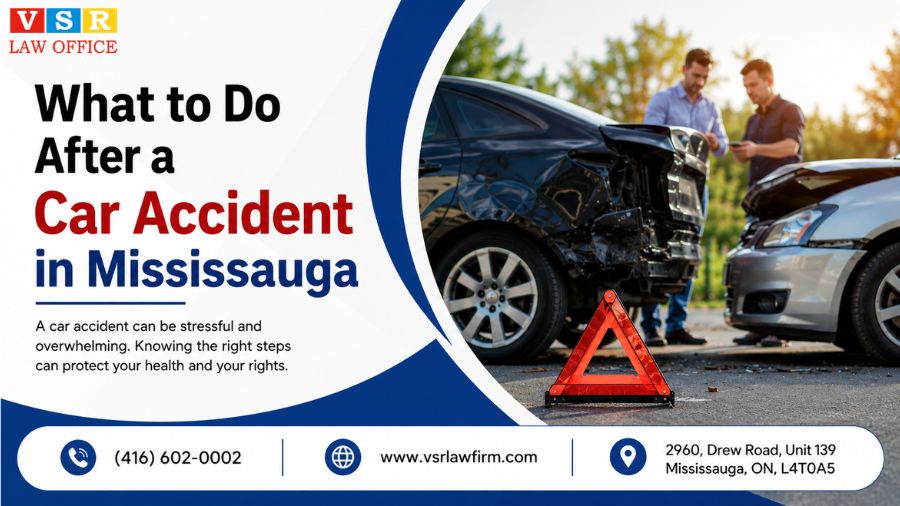
A car accident happens fast. One minute you are driving home on Hurontario or the 403. The next minute you are standing on the shoulder, shaking, not sure what to do.
This guide walks you through it in plain steps. It covers what to do at the scene, what to do in the days after, and when to call a car accident lawyer in Mississauga.
Also Read: Top Skills of a Real Estate Lawyer
Step 1: Stop and check for injuries
Never drive away. Leaving the scene is a criminal offence.
- Check yourself first.
- Check your passengers.
- Check the other driver if it is safe to do so.
- Call 911 if anyone is hurt.
Some injuries do not hurt right away. Whiplash and concussions often show up hours later. Do not tell anyone you are “fine” at the scene.
Also Read: All You Need to Know About a Personal Injury Lawyer
Step 2: Move to a safe spot
If the cars still drive and no one is badly hurt, move them off the road. Turn on your hazard lights.
If a car cannot move, leave it. Get yourself away from traffic.
Step 3: Call the police
In Ontario, you must report a collision to police if:
- Someone is injured or killed.
- The total damage looks like more than $5,000.
- A driver seems impaired.
- Another driver has no insurance or gives you fake information.
- A pedestrian, cyclist, or government vehicle is involved.
If police do not come to the scene, you must report the crash at a Collision Reporting Centre within 24 hours.
Step 4: Trade information
Get this from the other driver:
- Full name, address, and phone number
- Driver’s licence number
- Insurance company and policy number
- Licence plate number
- Make, model, and colour of the car
Also get the name and number of any witness. Witnesses disappear fast. A phone number today saves you a fight later.
Also Read: Personal Injury Lawyer Near Me: Finding Legal Help in Toronto
Step 5: Take photos
Your phone is your best evidence. Take pictures of:
- Damage to every car involved
- The whole scene from a few steps back
- Skid marks, glass, and debris
- Road signs, traffic lights, and lane markings
- The weather and road conditions
- The other driver’s licence and insurance slip

Step 6: See a doctor
Go to your family doctor, a walk-in clinic, or the emergency room. Do this even if the pain feels small.
Two reasons:
- Your health matters most.
- Insurance companies look for gaps in treatment. A delay gives them a reason to say you were not really hurt.
Step 7: Call your insurance company
Tell your insurer as soon as you can. You have seven days to let them know you plan to apply for accident benefits.
They will send you forms. You have 30 days to fill out and return the main application (the OCF-1).
Also Read: Top 5 Mistakes That Can Hurt Your Personal Injury Claim in Ontario
What not to do
- Do not admit fault at the scene.
- Do not agree to settle in cash and skip insurance.
- Do not sign anything you have not read.
- Do not give the other driver’s insurer a recorded statement.
- Do not post about the accident on social media.
What to do after a minor car accident in Ontario
Minor accidents follow the same rules. Fender benders still cause real injuries and real claims.
Do this:
- Take photos before the cars move.
- Trade information, even for a small scrape.
- Check the damage. Bumper repairs pass $5,000 more often than people think.
- Report it if the damage or injuries meet the rules above.
- See a doctor if anything hurts, even a little.
What you can claim after a car accident
There are two separate car accident claims in Ontario.
Accident benefits (no-fault). These come from your own insurer. You get them even if the crash was your fault. They can cover:
- Medical and rehab costs
- Income replacement if you cannot work
- Attendant care
- Help with housekeeping and caregiving
A tort claim (fault-based). This is a lawsuit against the driver who caused the crash. It can cover pain and suffering, lost income beyond your benefits, future care costs, and out-of-pocket expenses.
Also Read: How do I consolidate all my debts into one?
Both matter. Most people only know about the first one.
Deadlines you cannot miss
- 24 hours — report at a Collision Reporting Centre if police did not attend
- 7 days — tell your own insurer
- 30 days — return your accident benefits application
- 120 days — send written notice if you plan to sue the at-fault driver
- 2 years — start your lawsuit
Miss a deadline and you can lose your right to car accident compensation. This is the single biggest reason people call a lawyer late and regret it.
How a car accident lawyer helps
Also Read: What Evidence Do You Need for a Dog Bite Claim in Brampton?
Insurance companies have adjusters, doctors, and lawyers working for them. You should have someone working for you.
A car accident lawyer in Mississauga can:
- Handle the forms and deadlines
- Push back when benefits get denied or cut off
- Line up the right medical assessments
- Deal with the adjusters so you can rest
- Value your claim properly before you sign anything
- Take your case to the Licence Appeal Tribunal or to court if needed
You do not pay upfront. Most personal injury lawyers work on a contingency fee. The fee comes out of what you recover.
Also Read: How Long Can a Temporary Foreign Worker Stay in Canada?
Talk to us
If you searched “car accident lawyer near me” after a Mississauga car accident, you are in the right place.
VSR Law Professional Corporation offers a free consultation. Call 416-602-0002 or email info@vsrlaw.ca. We will tell you honestly whether you have a claim.
Frequently Asked Questions
1. What do you do after a minor car accident in Ontario?
Stop, check for injuries, and move to safety. Trade information with the other driver. Take photos. Report to police or a Collision Reporting Centre if the damage looks over $5,000 or anyone is hurt. Then tell your insurer and see a doctor.
2. What do I do right after a car accident?
Stay at the scene. Call 911 if anyone is injured. Turn on your hazards. Get the other driver’s information and take photos before the cars move.
3. How long do I have to report a minor collision in Ontario?
If police do not attend the scene, you have 24 hours to report at a Collision Reporting Centre.
4. How soon after an accident do I need to notify my insurance?
Within seven days. Call sooner if you can. You then have 30 days to return your accident benefits application.
5. How does insurance work when it’s not your fault?
Ontario uses direct compensation. Your own insurer handles your vehicle damage even when the other driver caused the crash. Your accident benefits also come from your own policy. To claim pain and suffering, you sue the at-fault driver.
Also Read: Struggling With Debt? Contact a Bankruptcy Lawyer in Toronto
6. How much will my insurance go up after a claim?
It depends on fault. An at-fault claim usually raises your premium at renewal, sometimes by a large amount. A not-at-fault claim normally should not, though your history still gets reviewed. Ask your broker before you decide.
7. Do I need a lawyer for a minor car accident?
Not always. Call one if you were injured, if benefits get denied, if fault is disputed, or if an adjuster asks you to sign a release.
8. How much does a car accident lawyer cost?
Most work on contingency. You pay nothing upfront and the fee is a share of what you recover. Get the fee agreement in writing.
Also Read: Bankruptcy vs. Insolvency: What’s the Real Difference?
9. How long do I have to sue after a car accident in Ontario?
Two years from the date of the accident. You must also send written notice to the at-fault driver within 120 days.
10. What car accident compensation can I get?
Medical and rehab costs, income replacement, attendant care, housekeeping help, pain and suffering, future care costs, and out-of-pocket expenses. The amount depends on how serious your injuries are.
This article is general information, not legal advice. Every accident is different. Speak with a lawyer about your own situation.
Also Read: 10 Bankruptcy Questions Canadians Ask Most Frequently