
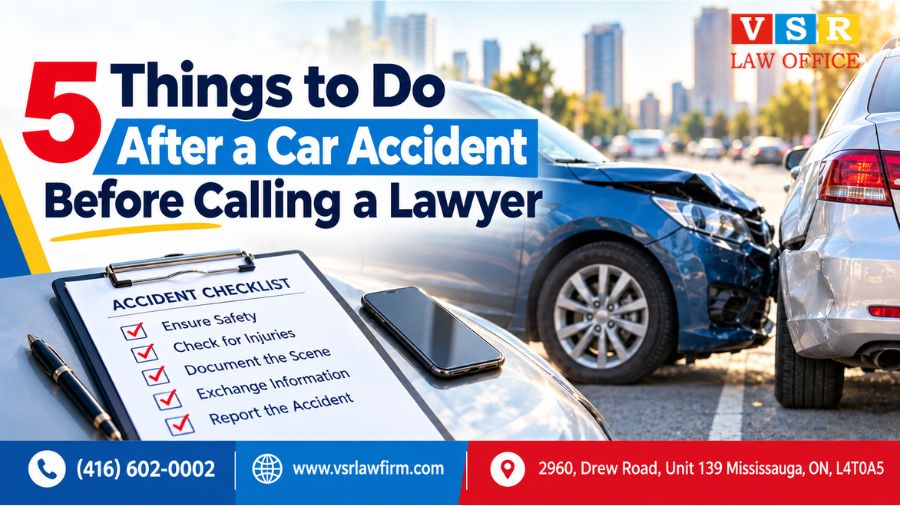
A car accident can happen without warning. Even a minor collision can leave you confused, stressed, or unsure about what to do next.
Knowing what to do after a car accident can help protect your health, your insurance claim, and your legal rights.
If you are involved in a collision in Ontario, there are several important steps you should take before contacting a car accident lawyer in Mississauga, Brampton, Toronto, or elsewhere in Ontario.
Also Read: How much Compensation do I have to pay for Personal Injury Compensation?
@vsr_law 🚨 Injured in an Accident? We Can Help. 🚨 A car accident, slip and fall, dog bite, or other injury can turn your life upside down. You may be dealing with pain, missed work, medical appointments, and insurance paperwork all at once. At VSR Law Office, we help injured individuals understand their rights and pursue the compensation they may be entitled to. 📞 Call us today at (416) 602-0002 to schedule your consultation and take the first step toward moving forward with confidence. Disclaimer: This content is for informational purposes only and not legal advice. For personal legal help, talk to a licensed professional. #VSRLaw #PersonalInjuryLawyer #AccidentLawyer #CarAccident #SlipAndFall #DogBiteInjury #InjuryClaim #InsuranceClaim #OntarioLawyer #BramptonLawyer #MississaugaLawyer #LegalHelp #CompensationClaim #AccidentVictim #InjuryLaw #LawFirm #KnowYourRights #MotorVehicleAccident #PersonalInjury #WeCanHelp #TorontoLawyer #AccidentBenefits #CarAccidentLawyer #accident #insurance #PunjabiLawyer #PunjabiCommunity #tiktok #viral #viralvideo #tiktokviral #legal #canada #ontario ♬ original sound – VSRLAW
1. Make Sure Everyone Is Safe
Your safety should always come first.
After an accident:
- Stay calm.
- Check yourself for injuries.
- Check your passengers.
- If possible, check whether anyone in the other vehicle is hurt.
- Call 911 if someone is seriously injured.
- Turn on your hazard lights.
- Move your vehicle to a safe location if it is safe and possible to do so.
Do not move a seriously injured person unless there is an immediate danger, such as a fire.
Some injuries are not obvious right away. Neck pain, back pain, headaches, dizziness, or emotional symptoms can appear hours or even days later.
Seek medical attention if you are experiencing symptoms.
Also Read: How Long Can a Temporary Foreign Worker Stay in Canada?
2. Report the Accident When Required
Many people ask what to do after a minor car accident in Ontario and whether they need to report it.
Ontario requires a collision to be reported to police when someone is injured or when the total damage to vehicles or property appears to be more than $5,000.
Depending on where the collision occurred, you may be directed to a Collision Reporting Centre.
When determining how to report an accident in Ontario, follow the instructions of the local police service.
Even when the damage appears minor:
- Exchange information with the other driver.
- Write down the licence plate number.
- Get insurance information.
- Keep a record of the location and time.
- Take photographs.
Do not leave the scene without exchanging the required information.
3. Take Photos and Collect Evidence
Evidence can become very important later.
If it is safe, use your phone to take photographs and videos.
Try to document:
- Damage to all vehicles
- Licence plates
- The accident location
- Traffic lights and signs
- Road conditions
- Skid marks
- Debris
- Weather conditions
- Visible injuries
Also collect the other driver’s:
- Full name
- Phone number
- Driver’s licence information
- Vehicle information
- Insurance company
- Policy information
If anyone witnessed the accident, ask for their name and contact information.
Avoid arguing about who caused the accident.
Also Read: Notary Public vs. Lawyer: Which is Right for Your Legal Needs?
4. Contact Your Insurance Company
Notify your insurance company as soon as possible.
If you are injured and intend to apply for Ontario accident benefits, the Statutory Accident Benefits Schedule generally requires you to notify the insurer within seven days, or as soon as reasonably possible afterward. After receiving the application forms, applicants generally have 30 days to submit the completed application.
Give your insurer accurate facts.
However, avoid guessing.
For example, do not say:
- “I am completely fine” if you are unsure.
- “It was definitely my fault.”
- “I don’t think I will need treatment.”
- “My injuries are minor.”
Simply explain what happened and what symptoms you are currently experiencing.
@vsr_law Were you injured in a car accident? After an accident, it is important to understand your rights and the next steps. You may be able to claim for medical treatment, lost income, pain and suffering, and other accident-related losses. Do not wait too long to get legal guidance. The right advice can help protect your claim and avoid mistakes. 📞 Contact (416) 602-0002 today for help with your car accident claim. Disclaimer: This content is for informational purposes only and not legal advice. For personal legal help, talk to a licensed professional. #VSRLaw #CarAccident #CarAccidentLawyer #PersonalInjury #PersonalInjuryLawyer #OntarioLawyer #AccidentClaim #InjuryClaim #MotorVehicleAccident #MVA #LegalHelp #AccidentBenefits #foryou #InjuredInAccident #KnowYourRights #CarAccidentHelp #InsuranceClaim #foryoupage #AccidentLawyer #tiktok #viral #viralvideo #viraltiktok #legal #legaltiktok #legaladvice #lawyer ♬ original sound – VSRLAW
Whose insurance pays in a car accident in Ontario?
Ontario’s insurance system includes accident benefits that may be available regardless of who caused the collision. For policies entered into on or after July 1, 2026, medical, rehabilitation, and attendant-care benefits remain mandatory, while several other accident benefits are optional depending on the coverage purchased.
Damages to vehicles are dependent upon fault, insurance, and the type of coverage that you have.
Also Read: Top Skills of a Real Estate Lawyer
5. Keep Records Before Calling a Lawyer
Before meeting a car accident lawyer in Ontario, organize your documents.
Keep copies of:
- Collision Reporting Centre report
- Police report
- Insurance information
- Photographs and videos
- Medical records
- Prescription receipts
- Treatment invoices
- Tow truck bills
- Vehicle repair estimates
- Rental vehicle expenses
- Employment records
- Pay stubs
- Emails from the insurance company
You should also write down your symptoms.
Keep notes about:
- Pain
- Sleep problems
- Difficulty driving
- Anxiety
- Missed work
- Difficulty doing household activities
- Changes in your daily routine
These records may help a personal injury lawyer in Mississauga, Brampton, or Toronto understand how the accident has affected you.
Also Read: Bankruptcy vs. Insolvency: What’s the Real Difference?
When Should You Contact a Car Accident Lawyer?
Consider getting legal advice if:
- You suffered injuries.
- Your injuries are getting worse.
- You cannot return to work.
- Treatment has been denied.
- The insurer is asking for extensive information.
- The insurer is disputing your injuries.
- Fault is being disputed.
- You are being asked to sign a release.
- You receive a settlement offer.
- Your injuries may have long-term effects.
Typically, Ontario has a two-year limitation period for commencing many civil proceedings from the time the proceeding was discovered. The applicable limitation periods vary with each set of circumstances.
Seeking advice early will assist in identifying the applicable limitation periods.
@vsr_law 🚗 Injured in a motor vehicle accident? Your treatment history matters. After an accident, insurance companies, judges, and juries may look at how consistently you followed your medical treatment plan. Seeing your family doctor, filling prescriptions, attending physio, and keeping proper records can make a difference in your personal injury case. Every case is different, so get the right legal guidance early. 📞 Call VSR Law Office: 416-602-0002 ⚖️ Personal Injury & Motor Vehicle Accident Claims Disclaimer: This content is for informational purposes only and not legal advice. For personal legal help, talk to a licensed professional. #VSRLaw #PersonalInjury #PersonalInjuryLawyer #CarAccidentLawyer #MotorVehicleAccident #accidentclaims #InsuranceClaim #OntarioLawyer #TorontoLawyer #LegalTips #KnowYourRights #AccidentRecovery #legaladvice #personalinjurylaw #tiktok #tiktokviral #viral ♬ original sound – VSRLAW
Frequently Asked Questions
1. What should you not say after a car accident?
Do not admit fault or guess about what happened. Avoid saying that you are completely fine if you have not yet been medically assessed. Stay calm and exchange the necessary information.
2. How long after a car accident can you make a claim?
Different claims have different deadlines. Ontario’s basic limitation period for many lawsuits is generally two years from discovery of the claim. Accident-benefit claims have much shorter notice and application deadlines, so you should act quickly.
3. What are typical settlement payouts for car accidents in Canada?
There is no standard settlement amount. Compensation may depend on the seriousness of the injuries, income loss, treatment needs, recovery time, available insurance coverage, liability, and other losses.
4. How fast do insurance companies pay out claims?
There is no single timeline. A simple property-damage claim may be handled faster than a serious injury claim. Medical evidence, treatment, investigations, and disputes can affect the length of the process.
5. How much does car insurance go up after a claim?
There is no fixed increase. Your premium may depend on fault, your driving history, accident forgiveness, your insurer’s rating system, your coverage, and other factors.
Also Read: Struggling With Debt? Contact a Bankruptcy Lawyer in Toronto
6. How long does the body take to recover from a car accident?
Recovery is different for every person. Some people recover within weeks. Others may experience pain or limitations for months or longer. Follow your doctor’s or healthcare provider’s recommendations.
7. What should you not tell your insurance company?
Do not provide information you know is incorrect. Do not guess about speed, fault, injuries, or recovery. Give accurate facts and say when you do not know the answer.
8. What should you not say to an insurance adjuster?
Avoid admitting fault, minimizing your injuries, exaggerating symptoms, or making guesses. Be truthful and keep your answers focused on the facts.
9. What is the biggest mistake people make with an insurance claim?
One common mistake is failing to keep records. Missing medical appointments, ignoring deadlines, giving inconsistent information, or signing documents without understanding them can also create problems.
10. What do insurance companies not want you to know?
Insurance policies and Ontario law can provide different types of coverage and benefits depending on the circumstances. You should review your policy carefully and seek legal advice if you do not understand your rights or a decision made by your insurer.
11. What should I do immediately after a car accident?
Check for injuries, call emergency services when needed, move to safety, exchange information, take photographs, collect witness information, report the collision when required, and contact your insurer.
12. What documents should I bring to a motor vehicle accident lawyer?
Bring your police or Collision Reporting Centre report, photographs, insurance documents, medical records, treatment receipts, employment information, repair estimates, and correspondence from insurance companies.
13. Do I need a lawyer if the accident was not my fault?
Not every accident requires a lawyer. However, legal advice may be useful if you were injured, lost income, require ongoing treatment, have a disputed claim, or are being offered a settlement.
14. What should I not say when filing a claim?
Do not guess, exaggerate, or provide information you know is inaccurate. Describe the accident and your symptoms as clearly and honestly as possible.
15. Where should I report a car accident in Ontario?
Depending on the circumstances, the accident may need to be reported to police or a local Collision Reporting Centre. In Ontario, collisions involving injuries or more than $5,000 in property damage generally must be reported to police.
Final Thoughts
Knowing what to do after a car accident in Ontario can make the days following a collision much easier.
Focus first on your safety. Report the accident when required. Collect evidence. Contact your insurance company. Keep copies of important records.
If you have been injured or are having difficulty with your insurance claim, speaking with a car accident lawyer in Mississauga, car accident lawyer in Brampton, car accident lawyer in Toronto, or another car accident lawyer in Ontario can help you understand your legal options.
A personal injury lawyer in Brampton, Mississauga, or Toronto can review the accident, insurance coverage, medical evidence, and applicable deadlines and explain the options available based on your individual circumstances.
Disclaimer: This article provides general information only and is not legal advice. Ontario automobile insurance rules, benefits, deadlines, and coverage can vary depending on the accident date and the terms of the insurance policy.