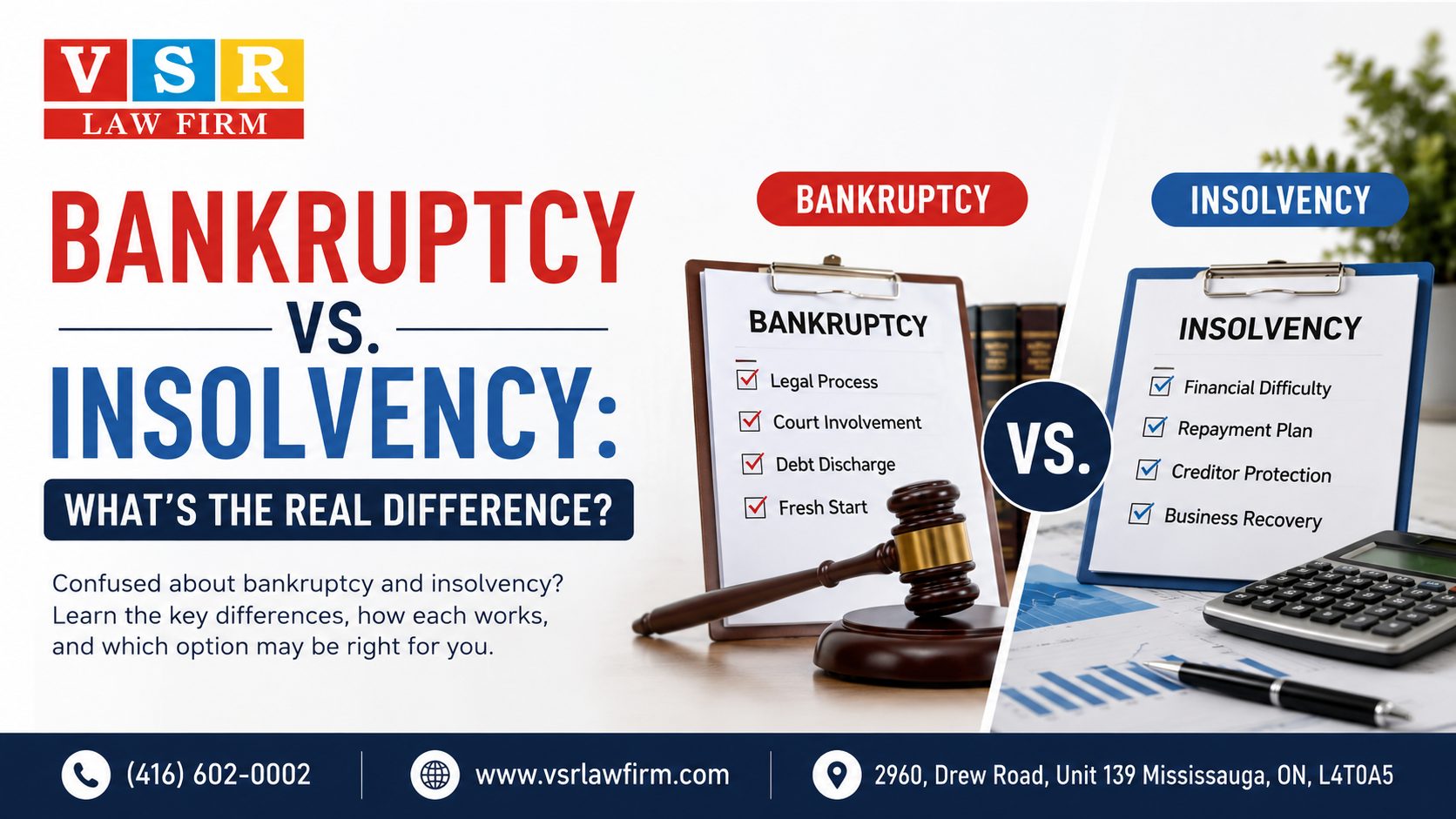
A lot of people use the words insolvency and bankruptcy as if they mean the same thing.
They don’t.
In fact, every person who files for bankruptcy is insolvent, but not every insolvent person goes bankrupt.
It sounds confusing at first. Let’s break it down in simple language.
Also Read: Consumer Proposal vs Bankruptcy: What Canadians Need to Know
What Is Insolvency?
Insolvency means you cannot pay your debts when they are due.
It does not automatically mean you have filed bankruptcy.
You may still be working, paying your bills, and trying to manage your debt. The problem is that your debts are greater than what you can realistically pay back.
You may be insolvent if:
- Credit cards are maxed out
- Collection calls keep coming
- You use one credit card to pay another
- Loan payments are constantly overdue
- You owe more than you own
Think of insolvency as a financial warning sign.
It means your debt situation has become serious.
What Is Bankruptcy?
Bankruptcy is a legal process that helps people who cannot repay their debts.
In Canada, bankruptcy is governed by the Bankruptcy and Insolvency Act.
When you file bankruptcy, you work with a Licensed Insolvency Trustee (LIT).
The trustee helps administer the bankruptcy process and deals with creditors according to Canadian law.
The goal is to provide a fresh financial start.
Also Read: Top 5 Mistakes That Can Hurt Your Personal Injury Claim in Ontario
Insolvency vs Bankruptcy: The Simple Difference
| Insolvency | Bankruptcy |
| A financial condition | A legal process |
| Means you cannot pay your debts | A formal solution for debt |
| Does not require court action | Requires filing through a Licensed Insolvency Trustee |
| Can lead to other debt solutions | One option for dealing with debt |
A simple way to remember it
Insolvency is the problem. Bankruptcy is one possible solution.
Also Read: Struggling With Debt? Contact a Bankruptcy Lawyer in Toronto
A Real-Life Example
Let’s say Sarah owes:
- $35,000 in credit card debt
- $15,000 personal loan
- $10,000 line of credit
Total debt: $60,000
Sarah earns enough to cover rent, groceries, and utilities. But she cannot keep up with her debt payments.
At this point, Sarah is insolvent.
Also Read: Can Bankruptcy Stop Collection Calls in Ontario?
She may decide to:
- Negotiate with creditors
- Enter a consumer proposal
- Consolidate debt
- File bankruptcy
If she chooses bankruptcy, she becomes bankrupt.
Before filing, she was insolvent but not bankrupt.
@vsr_law Debt doesn’t just take your money — it takes your peace too. 😔 The stress, the worry, the fear every time the phone rings — debt hurts more than just your wallet. Ignoring it won’t help, but asking for help will. You’re not weak for needing support — you’re smart for taking action. 🧠💼 📞 Call 416-602-0002 to get real help and start finding peace again. Disclaimer: This content is for informational purposes only and not legal advice. For personal legal help, talk to a licensed professional. #EmotionalDebt #DebtStress #FinancialAnxiety #DebtRelief #TorontoLawyer #VSRLaw #BreakTheStigma #KnowYourRights #BankruptcyHelp #MentalHealthAndMoney #DebtSupport #CanadianLawyer #FinancialWellness #LegalAdviceCanada #DebtSolutions #debt#KnowYourRights ♬ original sound – VSRLAW
Common Signs You May Be Insolvent
Watch for these warning signs:
- Missing monthly payments
- Constant creditor calls
- Paying only minimum balances
- Using savings to survive
- Borrowing money to pay other debts
- Feeling stressed every time bills arrive
Many people wait too long before seeking help.
The earlier you get advice, the more options you may have.
Also Read: Credit Counseling vs. Debt Consolidation Loans: Which Option Fits Your Financial Goals?
Alternatives to Bankruptcy
Bankruptcy is not always the first option.
Other solutions may include:
Consumer Proposal
A legal settlement with creditors.
You repay part of what you owe over time.
Debt Consolidation
Several debts are combined into one payment.
Informal Debt Settlement
Creditors may agree to reduced payments in certain situations.
A Licensed Insolvency Trustee can explain which option may fit your situation.
Also Read: What Evidence Do You Need for a Dog Bite Claim in Brampton?
Does Bankruptcy Eliminate All Debts?
Not always.
Many unsecured debts can be discharged, including:
- Credit card debt
- Personal loans
- Payday loans
- Certain tax debts
Some debts may survive bankruptcy, including:
- Most child support obligations
- Most spousal support obligations
- Court fines and penalties
- Debts arising from fraud
- Certain student loans
Each situation is different.
Also Read: Debt Consolidation vs. Bankruptcy: Which Path is Right for You?
What Happens After Bankruptcy?
Many people worry their financial life is over.
It isn’t.
After discharge, many individuals begin rebuilding their credit.
Some people obtain secured credit cards.
Others focus on budgeting and savings.
Recovery takes time, but it is possible.
When Should You Speak to a Bankruptcy Lawyer?
A bankruptcy lawyer can explain your legal rights and options.
You may want advice if:
- Collection calls are becoming overwhelming
- Wage garnishment has started
- Lawsuits have been filed against you
- Debt continues growing every month
- You are unsure whether bankruptcy is necessary
Getting advice does not mean you must file bankruptcy.
It simply helps you understand your options.
Also Read: Real Estate Lawyer Brampton: Legal Checklist for Home Buyers
Final Thoughts
The difference between insolvency and bankruptcy is actually quite simple.
Insolvency means you cannot pay your debts.
Bankruptcy is one legal solution available to deal with those debts.
Many people assume bankruptcy is their only choice. In reality, there may be other options available depending on your circumstances.
The most important step is getting professional advice before financial problems become even bigger.
Also Read: How Long Can a Temporary Foreign Worker Stay in Canada?
Frequently Asked Questions
1. Is insolvency better than bankruptcy?
Insolvency itself is not a solution. It simply describes a financial situation. Bankruptcy may be one solution, but alternatives such as a consumer proposal may also be available.
2. Are insolvency and bankruptcy the same?
No. Insolvency is a financial condition. Bankruptcy is a legal process used to address debt.
3. How long does insolvency last in Canada?
It depends on the person’s financial situation and the debt solution chosen. Insolvency continues until the debt problem is resolved.
4. What is the 90 day rule in bankruptcy?
Some transfers made before filing for bankruptcy can be scrutinized if they unduly benefit one creditor over another. The assistance of a professional must be sought concerning such cases.
5. Do I lose my assets if I declare bankruptcy?
Not necessarily. Some assets may be exempt depending on provincial laws and your circumstances.
Also Read: How do I consolidate all my debts into one?
6. Why do people avoid bankruptcy?
Many people worry about their credit rating, finances, or the stigma associated with bankruptcy.
7. Does bankruptcy clear all debts?
No. Certain debts may survive bankruptcy, including some support obligations, court fines, and certain student loans.
8. Which is worse, debt settlement or bankruptcy?
Neither is automatically worse. The best option depends on the amount of debt, income, assets, and personal goals.
9. How much do you pay monthly for bankruptcies?
Costs vary based on income, assets, and individual circumstances.
10. What not to do before Chapter 7?
Individuals must not incur any debt or move their property around before seeking professional help.
11. Why should you avoid bankruptcies?
Bankruptcy may affect credit and financial opportunities. However, for some people it may still be the most practical solution.
12. Can you save money in bankruptcies?
Rules regarding savings and assets depend on the specific bankruptcy and applicable laws. A Licensed Insolvency Trustee can explain how this works in your situation.
Also Read: Top Skills of a Real Estate Lawyer