

We all understand the significance of a good diet, including eating plenty of fruits and vegetables, drinking lots of water, etc. To maintain a healthy bodily and mental state. What about a sound financial diet, though? What does having one entail? What effects will wiser financial choices have beyond our spending and debt?
By developing wise financial practices, in the opinion of our bankruptcy and insolvency lawyer. We think Canadians can achieve financial success and contribute to society.
Also Read: How a Personal Injury Lawyer in Brampton Can Help After a Car Accident
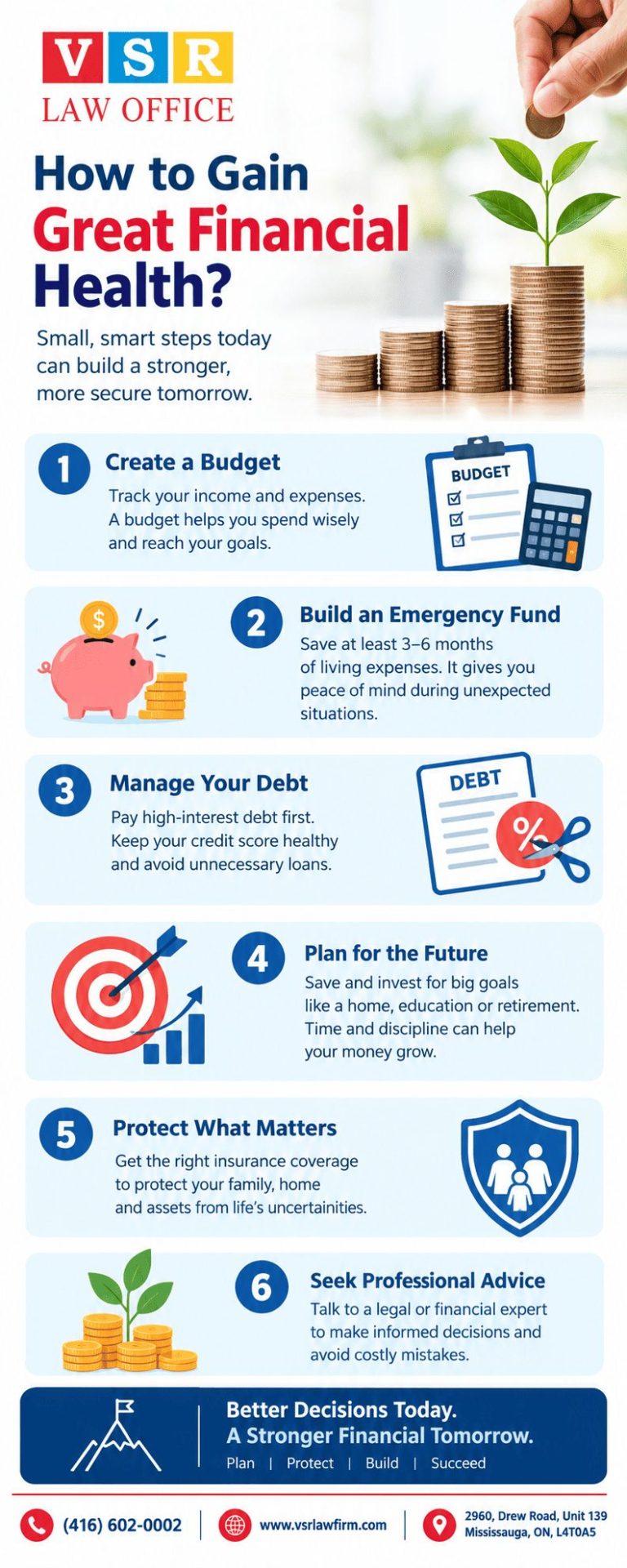
Tips to have a healthy financial diet
Keep a budget at all times
Regardless of how much money you possess. You must be aware of where and how your money is being spent. You risk jeopardizing your financial stability if you lose track of your money’s inflows and withdrawals.
Know the Fundamentals
Know your investments, obligations, and credit score. Understanding your financial condition is crucial, so you’ll know what actions to take—or not take—next. When it comes to your financial future, debt consolidation is significant.
Fewer Purchases
Consider quality, adaptability, and utility more than instant delight while buying purchases. You can now save money by purchasing more functional items with a longer lifespan.
Eliminate Debt:
One of your biggest obstacles may be debt. This may help you get closer to accomplishing your financial objectives. Understand some of the most common debt types. Recognize the best way to approach them.
Question the “Future”
Where do you want to be in a year, two, or ten years? Image the objectives. Concentrate on them. Find a means to start bringing that about right now. If you don’t know where you want to go, it can be challenging to know where you’re going.
Freedom Produces Happiness as a Byproduct
Reread that sentence. Freedom produces happiness as a result. When you try to provide yourself with options rather than “things.” You’ll discover strategies to accomplish your goals when, how, and when you desire. Freedom becomes more elusive when you shackle yourself with unavoidable debt or never-ending bills.
Also Read: How much Compensation do I have to pay for Personal Injury Compensation?
Achievable Investment Goals:
Another effective strategy is to set attainable investment goals and lead a financially sound existence. Just remember not to sail your investment ship without precise and well-defined objectives. Be SMART and follow a plan you’ve created. Specific, Measurable, Achievable, Realistic, and Time-bound is the complete form. A bankruptcy lawyer can help you successfully attain your financial goals.
Funds for Unexpected Emergencies:
There are ups and downs in life. There is no way to leave an emergency. You will always be responsible for a portion of the additional, unnecessary expense. You can run into trouble if you haven’t planned things out well. Nothing is worse than having to take out a loan.
Obtain the Benefits
Celebrate your successes as you convert a financial diet into a sound financial routine. After all, your relationship with money is a lifelong one. It doesn’t just come to a stop or pause; making it less of a love/hate connection is much more crucial.
Conclusion
It’s crucial to do you because everyone is unique, with their problems, interests, and financial strategies. You’ll discover what might function, like trying various foods or diets. It’s what doesn’t ring true. And when your requirements, circumstances, and financial situation change over time, your solutions might too. Being constant is essential. Keep on going. To build a sound and fulfilling financial relationship, strike the correct balance.
Stop Binging; then, A balanced D.I.E.T will help you get fit. Advance with all your might toward financial well-being.
Also Read: How Long Can a Temporary Foreign Worker Stay in Canada?
Note:
It’s essential to remember that while financial planning can help you maximize your savings, safeguarding them is just as crucial. It also expands at a reasonable rate, and it is up to you to notice any appreciable growth in your money over time.
Only when our income continues to grow steadily will our disposable savings increase. Consequently, maintaining control of our current savings will always be our priority.
It is equally essential to improve our disposable money. Therefore, it’s crucial to concentrate on developing our skills and advancing our careers. This is from the viewpoint of financial security.
FAQs:
1. What does good financial health mean?
Good financial health means managing your money wisely. It includes paying bills on time, saving money, controlling debt, and planning for future needs.
2. How can I improve my financial health?
Start by tracking your income and expenses. Create a monthly budget, reduce unnecessary spending, pay your bills on time, and save money regularly.
3. Why is creating a budget important?
A budget helps you understand where your money goes. It allows you to manage expenses, avoid overspending, and save more money for your goals.
4. How much money should I save every month?
Try to save around 10% to 20% of your monthly income if possible. If you cannot save that much, start with a smaller amount and increase it over time.
5. How can I manage my debt effectively?
List all your debts, including credit cards and loans. Make payments on time and focus on paying off high-interest debt first while meeting the minimum payments on other debts.
6. Why is an emergency fund important?
An emergency fund helps cover unexpected expenses, such as car repairs, medical bills, or a sudden loss of income. Aim to save enough to cover three to six months of essential living expenses over time.
7. How can I avoid unnecessary spending?
Make a shopping list before buying things, compare prices, and avoid impulse purchases. Review your subscriptions and cancel services you no longer need.
8. How can I improve my credit score?
Pay your bills on time, keep credit card balances low, and avoid applying for too much new credit at once. Check your credit report regularly to identify errors.
9. What should I do if I am struggling with debt?
Review your income, expenses, and total debt to understand your financial situation. Contact your creditors to discuss payment options. You can also speak with a qualified financial professional or a licensed insolvency trustee in Canada to learn about possible debt relief options.
10. How long does it take to achieve good financial health?
Improving your financial health takes time and consistent effort. Start with small steps, such as following a budget, saving regularly, and paying down debt. Over time, these habits can help you build a stronger financial future.
Also Read: Notary Public vs. Lawyer: Which is Right for Your Legal Needs?