
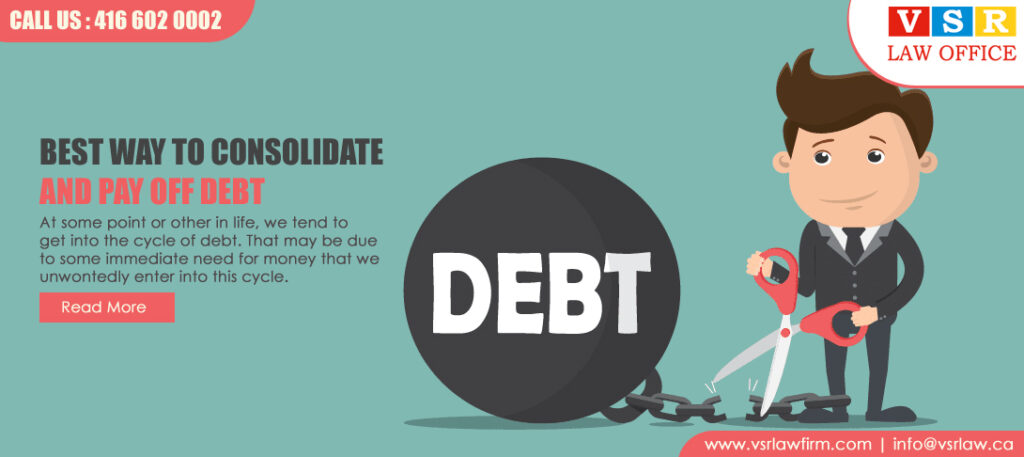
At some point or other in life, we tend to get into the cycle of debt. That may be due to some immediate need for money that we unwontedly enter into this cycle.
Also, there are instances when we get into the cycle of several loans. And pay off debts becomes difficult for us and creates many concerns.
Hence, one may take another additional loan to pay off debts these pending loans to reduce the issue. This is called debt consolidation, wherein one applies for the debt consolidation loan to pay the loans.
There are a lot of pros and cons associated with debt consolidation. In one place, debt consolidation helps you manage your finances, lower monthly payments, and regain control of your finances.
On the other hand, debt consolidation risks your spending, higher interest rates, transfer costs, annual fees, and any other additional fees are also included in the debt consolidation process. Hence, rather than reducing the loan, it may increase your spending and impact your money-handling skills.
Also Read: How Long Can a Temporary Foreign Worker Stay in Canada?
Our debt can be secured or unsecured.
In secured debt, there is something that one can keep up as an asset or as collateral which thereby helps you to back up your loan. It is easy to get a loan in secured debt. If one fails to make all the payments in time, the bank or the concerned authority may seize your collateral, and you may lose it.
@vsr_law Debt doesn’t just take your money — it takes your peace too. 😔 The stress, the worry, the fear every time the phone rings — debt hurts more than just your wallet. Ignoring it won’t help, but asking for help will. You’re not weak for needing support — you’re smart for taking action. 🧠💼 📞 Call 416-602-0002 to get real help and start finding peace again. Disclaimer: This content is for informational purposes only and not legal advice. For personal legal help, talk to a licensed professional. #EmotionalDebt #DebtStress #FinancialAnxiety #DebtRelief #TorontoLawyer #VSRLaw #BreakTheStigma #KnowYourRights #BankruptcyHelp #MentalHealthAndMoney #DebtSupport #CanadianLawyer #FinancialWellness #LegalAdviceCanada #DebtSolutions #debt#KnowYourRights ♬ original sound – VSRLAW
On the contrary, unsecured debt comprises credit cards or student loans. In this, there is no asset or collateral to keep as the backup for your loan. One may get a court case if failed to make all the payments well in time.
Also Read: Top Skills of a Real Estate Lawyer
Henceforth, there are ways wherein one can consolidate their debt. This includes the following:
Debit management program
In a debt management program, one gets a reduced interest rate on credit card debt. This helps you to create a monthly payment in an affordable way that reduces or eliminates the debt in approximately three to five years.
Credit card balance transfer
A credit card balance transfer is another way to consolidate debt. In this, one can transfer the balance of multiple credit cards to a single credit card so that it is easy to manage.
Personal Loan
In a personal loan, one can turn multiple balances into a single monthly payment, helping you consolidate your debt more organized.
Peer-to-peer online lender
Peer-to-peer online loans, which are also termed peer-to-peer online lending, are a great option when it comes to consolidating debt. This helps the individuals to get a loan directly from the borrower without having any mediator.
Home equity loan
This option can help you to alleviate your monthly interest payments. Remember! It is a risky strategy.
Also Read: Bankruptcy vs. Insolvency: What’s the Real Difference?
Borrowing from friends and family
This is a great option when it comes to lending money. When one borrows from their friends or family, returning the money at a specific time is no mental stress.
Cash-out auto reference
In this, one can refinance their loan and put the cash in their pocket. It is also called a cash-out auto refinance loan.
In conclusion, one can always have ways or solutions to any problem. When it comes to debt consolidation, there are a lot of ways to help you. As explained above, one can try these ways to consolidate and pay off debts.
Also Read: Notary Public vs. Lawyer: Which is Right for Your Legal Needs?
FAQs:
1. What does debt consolidation mean?
Debt consolidation means combining several debts into one payment. Instead of paying different credit cards, loans, or other debts separately, you may make one monthly payment.
2. What is the best way to consolidate debt?
The best option depends on your income, credit score, total debt, and monthly expenses. Common options include a debt consolidation loan, line of credit, balance transfer credit card, consumer proposal, or debt management plan.
3. Can debt consolidation lower my monthly payments?
Yes, it may lower your monthly payments by reducing the interest rate or extending the repayment period. However, a longer repayment period may mean paying more interest overall.
4. Does debt consolidation hurt my credit score?
It can affect your credit score, depending on the method you use. Applying for new credit may cause a temporary decrease, while making regular payments over time may help improve your credit history.
5. Should I pay off high-interest debts first?
In many cases, paying debts with the highest interest rates first can save money. You should still make at least the minimum payment on all other debts.
6. Can I consolidate credit card and personal loan debt together?
Yes. Depending on your situation, credit cards, personal loans, lines of credit, and some other unsecured debts may be combined into one repayment plan.
Also Read: A Buyer’s and Seller’s Quick Guide What Is a Conditional Offer and How Does It Work
7. What if I cannot qualify for a debt consolidation loan?
You may still have other options, such as a debt management plan or consumer proposal. A licensed professional can review your finances and explain which options may be available.
8. Is a consumer proposal the same as debt consolidation?
No. Debt consolidation usually involves borrowing money to repay existing debts. A consumer proposal is a formal legal process where you may repay only part of what you owe or receive more time to pay.
9. How can I pay off debt faster?
Create a realistic budget, avoid taking on new debt, pay more than the minimum whenever possible, and put extra money toward higher-interest debts.
10. When should I get professional help with debt?
Consider getting professional advice if you are missing payments, using credit to cover basic expenses, receiving collection calls, or struggling to manage your monthly debt payments.