
What is the difference between TRP and TRV?: There are a lot of people who are moving and shifting to other countries. However, living in a completely different country whose culture, language, lifestyle, ruling bodies, etc., everything is completely varied.There is a lot of documentation process that is required when you wish to move to another country. Whatever the reason, maybe because of work, study or just want to visit the country, you need a permit to be there.
Permit or permission by the authority members of that country to allow you there. The basic two necessary documents include the Temporary Remote Permit (TRP) and Temporary Resident Visa (TRV).
Both are different in their usage. It depends on the reason you are moving to that specific country. Every country has its own rules, regulations, and documentation; henceforth, it can vary as well.
But this is very basic information that you must know. You never know when you would want to or have to shift to any other country. Thereby, it is crucial to be well aware.
Also Read: How Long Can a Temporary Foreign Worker Stay in Canada?
Temporary Remote Permit (TRP)
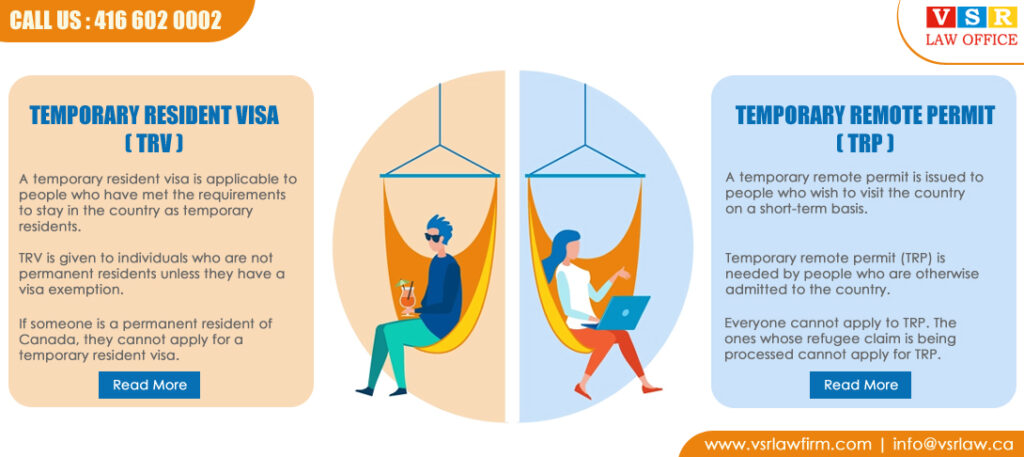
A Temporary Resident Permit (TRP) allows people to visit the country for a short period.
People who cannot enter the country under normal rules may need a TRP. It can help them enter the country for a temporary visit when they meet the required conditions.
Everyone cannot apply to TRP. The ones whose refugee claim is being processed cannot apply for TRP.
One can apply for a temporary remote permit well in advance or at the point of entry.
You need to prove that your visit to the country is necessary. You will have to leave Canada once your temporary remote permit expires.
The temporary remote permit can be valid for between one day and three years.
You cannot renew your temporary remote permit. You will have to leave the country and apply for a new one.
Also Read: Bankruptcy vs. Insolvency: What’s the Real Difference?
Temporary Resident Visa (TRV)
A temporary resident visa is applicable to people who have met the requirements to stay in the country as temporary residents.
TRV is given to individuals who are not permanent residents unless they have a visa exemption.
If someone is a permanent resident of Canada, they cannot apply for a temporary resident visa.
One can apply for a temporary resident visa prior they arrive to Canada.
In the case of a temporary resident visa, you will be leaving Canada at the end of your stay. You cannot work or study in Canada unless you are authorized to do so.
A temporary resident visa is valid for up to ten years.
In the case of a temporary resident visa, you can renew it anytime before it expires. But this must be done well in time because the renewal process also takes a lot of time.
Thereby concluding that it was all about the TRP and TRV. Both are different in terms of usage. This will help you know when you need TRP and TRV.
Also Read: Struggling With Debt? Contact a Bankruptcy Lawyer in Toronto
FAQs:
1. What is a TRP?
A Temporary Resident Permit (TRP) is a special permit that lets someone who normally cannot enter Canada enter or stay for a specific reason. Canadian authorities usually issue TRPs in exceptional situations.
2. What is a TRV?
A Temporary Resident Visa (TRV) is a visa that allows eligible foreign nationals to travel to Canada as a visitor, student, or worker. It shows that you meet Canada’s entry requirements.
3. What is the main difference between a TRP and a TRV?
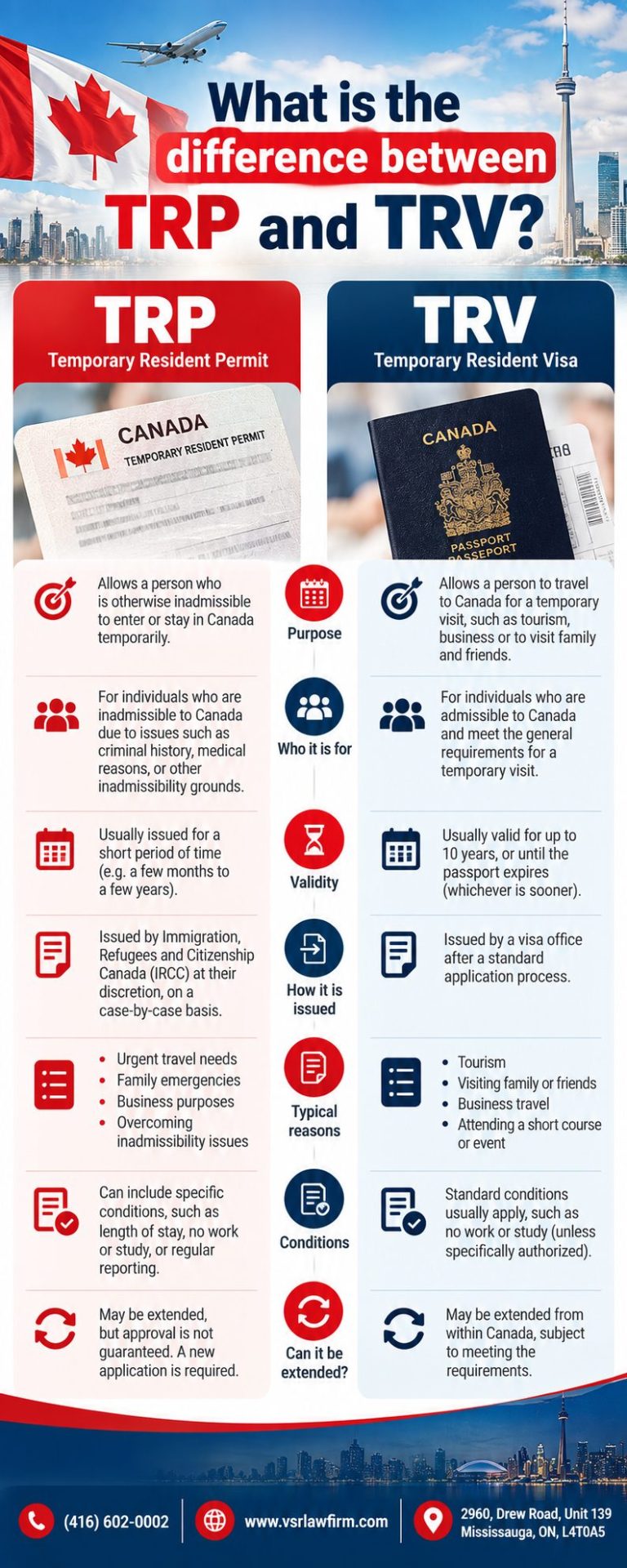
A TRV is for people who are admissible to Canada and meet the visa requirements. A TRP is for people who are inadmissible but have a valid reason to enter or remain in Canada.
4. Who needs a TRP?
If Canada finds you inadmissible because of certain criminal convictions, medical concerns, or other reasons, you may need a Temporary Resident Permit (TRP).
5. Who needs a TRV?
Citizens of many countries need a TRV before travelling to Canada for tourism, business, study, or work.
Also Read: Notary Public vs. Lawyer: Which is Right for Your Legal Needs?
6. Can I apply for both a TRP and a TRV?
In some cases, yes. If you are inadmissible and also require a visa to travel to Canada, you may need to apply for both, depending on your situation.
7. How long is a TRP valid?
A TRP can be issued for a short period or for up to three years. The validity depends on your individual circumstances and the immigration officer’s decision.
8. How long is a TRV valid?
A TRV may be issued as a single-entry or multiple-entry visa. Its validity depends on your passport and the decision made by Canadian immigration authorities.
9. Does a TRP guarantee entry into Canada?
No. Even with a valid TRP, the border services officer makes the final decision about whether to allow you into Canada when you arrive.
10. Which one should I apply for?
If you meet Canada’s entry requirements, a TRV may be enough. If you are inadmissible but have a strong reason to travel, you may need a TRP. An immigration professional can help determine the right option for your situation.
Also Read: Top Skills of a Real Estate Lawyer